
 Surus Enterprises
Lawlessness Is a Choice
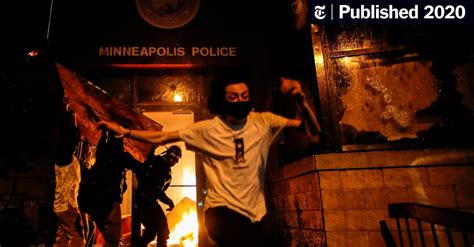
2020 George Floyd protests turned into violence and rioting once the sun set in Minneapolis
The following is adapted from a speech delivered on September 30, 2025, at Hillsdale College’s Blake Center for Faith and Freedom in Somers, Connecticut.
While being interviewed on a recent podcast, Texas Democrat Congresswoman Jasmine Crockett decided to opine on crime, a topic on which she apparently considers herself to be an expert. Her nutty conclusion was this: “Just because someone has committed a crime, it doesn’t make them a criminal.”
I can see how this logic would have a wide range of uses for politicians: “Just because someone told a lie, it doesn’t make them a liar”; “Just because someone took a bribe, it doesn’t make them corrupt.” It’s a bit like the thought experiment: “If a tree falls in a forest and no one is around to hear it, does it make a sound?” If a crime is committed and no one is responsible, was there actually a crime at all?
Of course, it’s nonsense. A criminal is defined precisely as a person who has committed a crime. But when Crockett chooses her own definitions, she is simply echoing a progressive shibboleth that has turned blue cities across the country into lawless hellholes. It holds that people who commit crimes have no agency—that they are helpless victims of circumstance. Therefore, any attempt to hold them accountable by arresting them or putting them in jail is unjust—it further victimizes them.
The obvious result of this logic is that criminals are emboldened and their real victims become helpless hostages to lawlessness.
It is a short step from Crockett’s logic to the justification of defunding the police as a way to “make communities safer.” That communities become safer by having fewer police is, of course, a lie, but defunding police is what progressives have been doing since the anti-cop, BLM-Antifa riots of the “Summer of Love” in 2020.
As a former police reporter, I’ve seen how soft-on-crime policies hurt the very people progressives pretend to care about. It’s precisely the most vulnerable in our big cities who need the most policing and have the least resources to protect themselves from mayhem.